Wednesday, 12 August 2015

Is Nextbit the Next Big Player in Premium Smartphones?


Nextbit, the smartphone run by former Google, Apple, Amazon, and HTC employees, will launch its first Android smartphone on September 1.
In an interview with CNET, the company’s CEO Tom Moss, who previously worked at Google stationed at Android, said the phone will be a “premium” model, likely priced between $300 and $400, with incremental software updates that will improve the phone’s performance.
“Your phone will perform better over time and function at a higher level because of this software enhancement,” said Nextbit. The company is focusing on developing a smartphone that will adapt to you, said Moss with ever changing software. 
“Phone fatigue is a real thing,” he said. “That’s why we’re doing something different.” Just how different Nextbit will be remains to be seen.
Nextbit is striving for that innovative space in the smartphone industry where companies like Microsoft and Samsung have either been struggling to get a foothold or making a loss in recent times. Meanwhile Apple has a staggering market share and popularity.
At the same time, the growth of modestly priced smartphones, like those from OnePlus or Xiaomi, is making an impact on the global market.
Nextbit didn’t reveal any information regarding its relationships with carriers. 
Moss and the company’s chief technology officer Mike Chan both worked on Android. The company also features Scott Croyle, a former design head at HTC.

Tuesday, 11 August 2015

Nextbit's mysterious Android smartphone will be revealed on September 1


Nextbit, a mobile developer run by former Google, Apple, Amazon, and HTC employees, plans to unveil its first Android smartphone on September 1st. In an interview with CNET, the company said the device will be priced in the "premium tier" of smartphones between $300 and $400 and will be, in the words of chief executive Tom Moss, "friggin' awesome." In fact, Nexbit's big promise is that its smartphone won't just be good, but will improve over time as software updates augment its performance and cloud services expand its storage.

"Your phone will perform better over time and function at a higher level because of this software enhancement," the company told CNET. Chief technology officer Mike Chan, an early member of Android along with Moss, added: "We're focusing on a device that can adapt to you." Exactly what this means for customers isn't clear, but alterations to Android as far-reaching as Amazon's Fire OS have been ruled out according to CNET. Previous reports have suggested that Nextbit devices will include Handoff-style software that allows users to save an app in whatever state it's in and pick it up at the same point on other devices.


The company is going to have to do more than just replicate existing features to impress in an increasingly challenging market though. HTC is almost out for the count, Samsung's profits are falling, OnePlus continues to offer high-end smartphones for less, and a host of Chinese companies such as Huawei, Xiaomi, and ZTE are making substantial gains. Nextbit will have to do something special to stand out from the crowd, but the company is at least confident in its own uniqueness. "Phone fatigue is a real thing," Moss told CNET. "That's why we're doing something different."

Monday, 10 August 2015

Rise of smartphones means end for keys and cash, futurist predicts


Dr Pearson, who previously predicted the arrival of text messaging, has partnered with mobile network TalkTalk Mobile to come up with his expectations, which come in the wake of new data from Ofcom which showed smartphone use has overtaken laptops for the first time when it comes to accessing the internet.

On the demise of keys, Dr Pearson said; "The days of digging through handbags and cursing after locking our keys inside the car will be fading by 2025.
"NFC technology will enable us to lose those elusive keys for good. With a tap of the phone, doors will open wide, with fingerprint recognition keeping our virtual keys safe."

Near field communication, or NFC, is the same technology already used to power contactless card payments, and will also mean the end of cash, Dr Pearson said.
He also suggested that improving smartphones cameras will mean the end of compact mirrors.
"Pocket mirrors will disappear in favour of the portable dressing-room in our pockets. By 2025 augmented reality will allow us to 'wear' any number of stylish outfits or virtually try the newest haircut.

"Anti-ageing creams that don't live up to their promise will also be put to the test as our phones will be able to microscopically zoom into our skin and work out whether they're really making a difference."

Driving licences will also be among the physical items to vanish, he says.

Dr Pearson added: "Driving licences will have moved onto our smartphones by 2017 and will talk directly to new 'friendly' speed cameras.

"Eight years down the line, these cameras will notify you immediately if you're going to break the limit and warn you to slow down or risk a penalty.


"These informal warnings mean first-time offenders won't suffer the consequences of a genuine mistake and the yellow boxes on the sides of our roads will no longer instil quite as much terror into the hearts of drivers."

Sunday, 9 August 2015

Google set to reboot Android One smartphone project in India


On paper, Android One makes a lot of sense. You create a bunch of super-low-cost smartphones, stuff them with the latest version of Android, make sure that they stay updated, and voila!

Since the Android One project has certain expectations for hardware and software, everyone buying a low-cost Android One device is going to get a pretty similar experience—unlike, say, those buying other low-cost Android smartphones that contain forked versions of the OS (and could have any number of issues).

Unfortunately, Google's ambitions of having billions of people using cheaper Android One devices hasn't exactly panned out. According to Recode, the company has struggled with supply chain issues, struggled to compete in ultra-low-cost smartphone markets that are already filled with plenty of competing devices, and struggled to work effectively with the phones' manufacturers to ensure timely updates to the devices (and to market them to potentially interested purchasers).

That's not to say that Android One is down and out, however. In fact, Google is planning to relaunch the project soon with even more ambitious goals than before. According to the Financial Times, Google is allegedly working on a new plan for India, and the company is looking to get its Android One devices down to an equivalent of $30-50 or so. (The first Android One smartphones were priced at just around $100 in India.)

Google will also be working on new ways to address one of the key issues hurting Android One in India: bandwidth. Some of Google's flagship apps like YouTube and Maps require larger amounts of bandwidth than what most Android One customers in India have (or want to pay for). Though Google has been working to address this issue by creating offline versions of some of its apps, it's planning to create even more Android One apps and services that can function well in a low-bandwidth environment for its Android One refresh.

"There are several battlegrounds where we are not winning [and] local search is clearly the one where it's most apparent," said Google vice president Rajan Anandan, in an interview with the Financial Times.

"Strategically [India] is very, very important. Don't get me wrong, the revenue is interesting, but […]  we're here really because 10 years from now a billion Indians will be online and when we have a billion Indians online we think that's going to make a huge difference to the global internet economy."


And, of course, Google would love it if one billion more people were tied into its Android ecosystem—in addition to all the Google apps and services that come with it.

Saturday, 8 August 2015

The death of HTC: The slow and painful demise of a once great smartphone brand


The demise of HTC's smartphone division has been writ large for some time. But after the release of its latest financial results, it is safe to say the end is very near, and it is now simply a matter of when rather than if. HTC's stock price closed on Thursday (6 August 2015) at its lowest point in a decade.
The company, seen as one of the early pioneers of the smartphone, has slipped out of the list of top 10 phone makers globally. In its results for the second quarter of 2015, it slashed sales estimates for the coming quarter by almost 50% and predicted a loss five times higher than analysts were expecting. One figure more than any other in the company's financials indicates the real trouble that HTC is in. Entitled Inventory Turnover Days, the figure indicates how many days it takes for the company to sell its entire inventory. A lower figure is clearly better, particularly in the smartphone market, where a six-month-old device is often seen as obsolete.


HTCs Inventory Turnover Days figure for this period came in at 83. (In a stark contrast, the same figure for Apple was 15.) This means that it takes HTC almost three whole months to shift its stock. And what it also means in real terms is that HTC is simply unable to get people to buy its phones – in particular its flagship HTC One M9smartphone, which went on sale in April of this year.
The problem for HTC is not that it makes terrible smartphones, but that it has no identity and is getting lost in the ever-increasing sea of smartphone manufacturers.

The only company currently making any significant money from smartphones is Apple. Samsung has seen its smartphone market share, and profits, slide precariously in the last 18 months, and the hundreds of other manufacturers out there are seeking out ever narrower margins. LG's latest financials showed that it earned less than 1p for every phone it sold in the second quarter of 2015 – an indication of the cut-throat nature of the market at the moment.
Where did it all go wrong for HTC?


HTC started out life making white-label devices for companies such as Palm and HP before deciding that it wanted a part of the fame and glory for itself. As the Android-powered smartphone revolution exploded at the end of the last decade, HTC was right there in the vanguard, leading the way. In 2011, it even charted above Apple as the number one smartphone brand in the US.

But then things started to go wrong. At the premium end of the market it was squeezed out by Samsung and Apple, while at the budget end it was seeing its profits eroded by Chinese upstarts including ZTE and Huawei. It could not match the marketing budget of Samsung – and frankly, no one could – and its smartphones were not offering anything unique enough to simply stand on their own merits.


Three years ago, it went back to the drawing board and launched the HTC One to widespread critical acclaim. The phone was beautifully designed and on a par with the iPhone in terms of build quality and looks. And, as HTC was eager to remind everyone, it won many industry awards. The problem was that, relatively speaking, no one actually bought it.

Reports suggested that three months after launch, HTC had racked up five million sales – the same figure that Apple's iPhone 5 notched up in its opening weekend, and just half the number of Galaxy S4s Samsung sold in its first month on sale. Three years down the line and HTC is nowhere. It's One range has stagnated, and its Desire brand of smartphones are simply lost amid the sea of similar devices from nimble and flexible startups that are producing smartphones with unique features at a price that HTC cannot match.

In July of this year, HTC launched four new smartphones under its Desire brand, but you would be forgiven for not noticing. The Desire 626 is the most interesting of the lot, and I am testing it at the moment, but HTC cannot tell me how much it will cost or when it will be launched. The phone replaces last year's Desire 620, but when I went to find some reviews of that smartphone, I struggled.
Most articles I found are simply previews of the device, while the one review I did find fromExpert Reviews lamented what it called the phone's "poor screen and mediocre battery life".TechRadar's admission – that it had attempted to review the phone twice, but on both occasions the review units failed – suggests there are deep-rooted problems at the heard of HTC's smartphone operation.
HTC is clearly in trouble. Its smartphones are not selling, it is failing to innovate at the premium end of the market and its mid-range and budget smartphones are failing to cut the mustard. So what is the solution? According to the company's co-founder and chairwoman Cher Wang – who recently took over the CEO role from Peter Chou – the solution is to cut jobs, "rethink its smartphone strategy" and "optimise its portfolio".

It intends to do this by launching a "fashionable and trendy phone" in time for Christmas, Wang told investors on Thursday (6 August 2015). This smacks of desperation from a company that's out of ideas and grasping at straws.

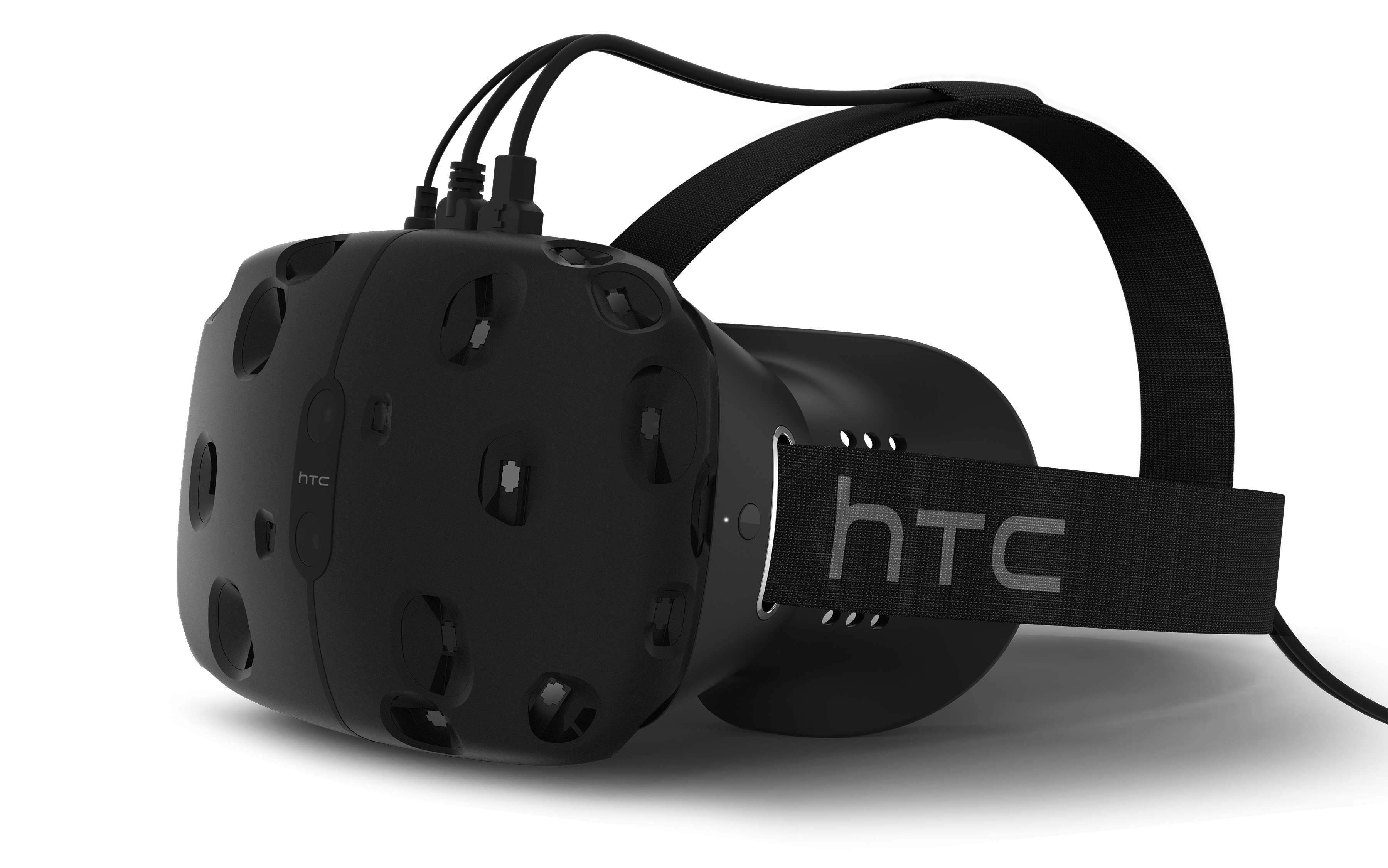
The company has made some moves outside of smartphones in recent months, specifically with its partnership with Valve in the Vive VR headset, which does look like a potentially profitable route to explore.


The company also announced the Grip fitness tracker in partnership with Under Armour at Mobile World Congress in March. However, it has since announced that the product will no longer come to market, asserting instead that it would be continuing development in the wearables and fitness markets.

Where HTC's future lies is uncertain, but what I think most people would now say is that smartphones is no longer the way forward.


Friday, 7 August 2015

A Quicker Way to Pair Smartphones: Shake Them

Pairing smartphones is much trickier than it needs to be, say computer scientists, who have developed a quicker way. 


Pairing two smartphones to swap photos or documents or anything else, is an annoyingly complex process. Via Bluetooth, for example, this usually require one user to manually enter a unique key supplied by one of the devices.

That’s time consuming, fiddly and a significant barrier to quick connections. So a faster, easier way of pairing would be greatly appreciated.
Today, Hıdır Yuzuguzel at Tampere University of Technology in Finland and a few pals say they’ve found a much easier way to do it. Their protocol is to hold both devices in one hand and shake them together.

The idea makes use of the accelerometers built into most modern smartphones. The protocol ensures that this shaking produces the same unique key on both devices that they then use to connect. But it must also ensure that another smartphone cannot easily reproduce the key and thereby connect by accident or maliciously.

The new protocol does this in a straightforward way. The on board software is primed to look for the sharp jolt from the accelerometers caused by two smartphones bumping together. This synchronizes the software in both devices to start analyzing the shaking motion.

Of course, there is no guarantee that the accelerometers will be exactly aligned—one phone might be upside down, for example. And in any case, their frames of reference may not be aligned. So the software must extract features from the shaking data that are frame independent.

It does this by looking at ten different aspects of the accelerometer data, such as the number of peaks, root-mean-square, skewness, peak to peak and average power and so on. Each of these factors are quantized to produce a four bit signal, which when added together, creates a bitstream that is 40 bits long.

An important question is how unique this bit stream is; whether another smartphone could reproduce it. To find out, Yuzuguzel and pals tested their algorithm on two Samsung Galaxy Nexus smart-phones.

“Off-line experiments showed that 76% of same shaking processes generate the same key. On the other hand, only 4% of different shaking processes generated the same key,” they say. And the team are confident this can be improved.

That’s interesting work that could one day make it easier to pair smartphones. Whether it ever gains traction is another question entirely—is this kind of shaking something that people would really want, or remember, to do when pairing their phones?

What Yuzuguzel and pals need is an smartphone maker or maker of smartphone operating systems to pick up their idea and run with it. Something they must surely have their fingers crossed for.

Thursday, 6 August 2015

Sony Xperia Z3+ review: A fabulous smartphone with a big problem


Sony has a solid tradition of producing waterproof smartphones.
Most of their latest devices can survive a dip in the drink, but can they cope with something a little more extreme?
With the Japanese firm’s latest Xperia Z3+ arriving at Daily Star HQ, we decided it was time to put this new flagship phone to the ultimate test – a white water rafting adventure in the freezing rivers of Austria.
Sony doesn’t recommend this level of abuse, but is confident it can survive 30 minutes submerged to a depth of around 10m.
So, with the device squeezed inside our wetsuit, we hit the water and put it through a punishing hour of extreme sports – and, boy, were we impressed.
The Z3+ made it through with flying colours, suffering no ill-effects from being submerged in ice-cold water for over an hour.
It’s phenomenal stuff, especially as Sony has achieved this without the need for annoying covers over the charging and headphone ports.
Few phones can cope with water and it certainly gives the Z3+ a very unique selling point.
Being waterproof isn't the only thing to get you excited about this phone as the Xperia Z3+ also includes a dazzling 5.2-inch HD display, super-fast Snapdragon 810 Octa Core processor and, with Sony’s classic metal and glass styling, the Z3+ wouldn’t look out of place on a Paris catwalk.
The design also includes tiny shock absorbers on each corner, which should help avoid a smashed screen if it happens to slip through your fingers.
And you get a decent 32GB of expandable storage and some very classy colours to choose from.
For your extreme photos there’s a tasty 20.7-megapixel rear camera with selfies being snapped on the phone's 5-megapixel front-facing camera.
And you can listen to top quality tunes via the phone’s High Res Audio player.
So, with all these features, it looks good for the Xperia Z3+ – but sadly there’s a major issue that simply can’t be ignored.
This phone is hot...and not in a good way.
Using some of the Z3’s clever camera features makes it overheat to the point where it turns itself off.
And filming in ultra 4K quality for any more than two minutes brings up an alert warning of the heat danger.
Sony has had this problem before and it’s not good enough that the techies haven’t found a way to halt the heat.
Battery life won’t have you leaping with joy either with phones from Samsung and Apple easily beating it in our famous Star Wars juice test.
Most phones make it through the original space trilogy without any issues, but the Z3+ ran out of puff before we'd finished watching the final movie.
It’s such a shame this device has been let down by these issues as it should easily be a 5 Star phone.

VERDICT:
Sony has produced another stunner with the Z3+ and surviving our underwater adventure was mighty impressive.
The device has plenty of nice features, is fast and its classic styling makes this one of the best looking phones you can buy.
If you do splash your cash on one, we guarantee you’ll like it – just be ready to feel the heat when you use it.